
Invest Here
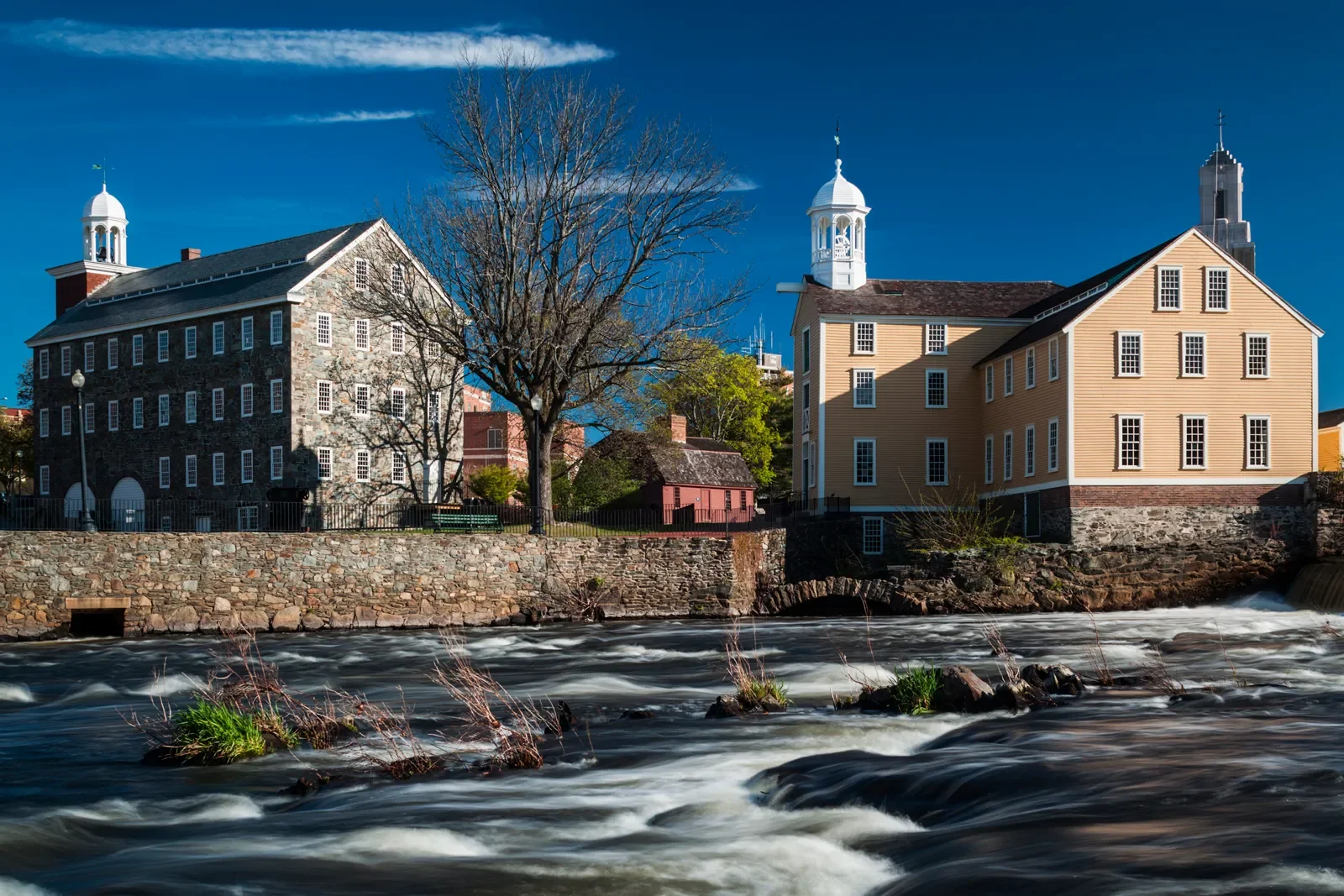
Pawtucket is a historic mill city experiencing one of New England's most exciting transformations. Strategically located within the Greater Providence–Boston corridor, the city has attracted more than $250 million in public and private investment in recent years—and the momentum continues to build.
Severe regional housing shortage sustaining demand for workforce, market-rate, and mixed-income housing
Large inventory of underutilized mill and industrial stock ripe for adaptive reuse
Competitive land and acquisition costs relative to Providence and Boston
Fast-growing MBTA ridership, with station parking near capacity
Strong municipal and state-level will for public-private partnership
Proximity to Providence's education, healthcare, innovation, and blue economy ecosystems
Market Context
Demographics
Population: 76,996 / 32,239 households
Population Growth: 2020–2024+2% (vs. 0.7% MSA)
Distance to Providence: 5 minutes
Distance to Boston: 45–60 min, I-95 / MBTA
Recent public/private investment: $250M+
MBTA ridership growth, FFY25: +28% / ~1,000 daily
Annual housing absorption: 60–80 units, ↗100–120
Qualified Opportunity Zone
Where Incentives Make Investment Go Further
-
Defer capital gains taxes, reduce gain by 10–15% after 5–7 years, and eliminate gains entirely after 10+ years. Recent legislation made the program permanent with rolling 10-year designations.
-
Municipal TIF (RIGL Chapter 45-33.2) allows cities and towns to use future property tax increases to pay for public and private development. It helps fund projects like housing, businesses, and public spaces.
Super TIF allows the PRA to tap into specific state tax revenues generated by designated zones (such as portions of the downtown growth districts and federal opportunity zones) to help finance large-scale urban regeneration.
-
Pawtucket’s Tax Stabilization Program encourages commercial and industrial investment by offering property tax incentives for eligible projects. Qualifying investments of at least $250,000 may receive a five-year property tax phase-in, while projects of $5 million or more may be eligible for a 10-year graduated tax stabilization agreement, subject to City approval and program requirements.
-
The Community Development Block Grant (CDBG) program provides annual grants to States, larger cities, and counties for a broad range of activities that preserve and develop viable urban communities. The program’s principal beneficiaries are low-moderate income households.
-
The Rhode Island Department of Environmental Management (RIDEM) oversees brownfield remediation through its Site Remediation Program. It transforms abandoned or underutilized industrial and commercial properties with known or suspected contamination into safe, productive community and economic assets
-
RI Commerce provides key state-level incentives including Innovation Vouchers up to $75,000 for R&D, Qualified Jobs Tax Credits up to $7,500 per job annually for up to 10 years, Main Street streetscape funds, and Site Readiness grants to boost local economic growth and business expansion.
Regulatory Approval Process
Planning Dept. staff actively assist developers before formal submission.
Pre-application Meeting
All projects comply with the Pawtucket Zoning Ordinance; overlay districts reduce friction.
Zoning Compliance
RIDEM brownfield pathways where applicable; Historic District Commission review for demolition of older structures.
Environmental & Historic Review

Public hearings for zoning and special permits; neighborhood outreach recommended for larger projects.
Community Engagement
Compliance required; impact fees and infrastructure contributions are project-specific and negotiable for catalytic projects.